How Jersey Moving Pro Handles Moves During New Jersey Summer Heat
If you have ever carried a sofa up a third-floor walk-up in July, you understand that summer is the busy season and the hardest season. In New Jersey, humidity lifts off the asphalt by 10 a.m., attic temperatures push past 110 degrees, and even a short carry from curb to door can feel twice as long. People still need to move, leases still end, and closings line up for late June through August. A qualified crew that works safely and efficiently in heat does not get there by chance. It is systems, training, pacing, and gear, tuned to the climate and the clock.
The heat changes everything. Materials behave differently, food and plants need special handling, and timing matters more than usual. Hydration, shade, and rest are not nice to have, they are operational controls. Over the years, I have watched crews succeed or struggle based on how they plan around weather. What follows is a look at how seasoned movers navigate peak heat in New Jersey, with specifics drawn from the way Jersey Moving Pro structures summer operations so the day ends on time and without damage or injury.
Summer heat in New Jersey is not an edge case, it is the baseline
The pattern is familiar. Mornings start warm, not cool, and humidity rises faster than the temperature. By lunchtime, decks and stoops are hot to the touch. Narrow streets in towns like Montclair, Morristown, and Jersey City collect heat with little breeze. Many older homes rely on window AC that does not cool stairwells or hallways. Garages and sheds become ovens. Crews spend long stretches outdoors on asphalt driveways loading or staging. Heat waves are not one-off surprises. In a typical summer, you can expect multiple weeks with daily highs over 90. Planning as if every day will hit those numbers produces better results all season.
The risks no one sees until they cause a problem
Heat does not just exhaust people. Adhesives soften, tape slumps, and shrink wrap can trap moisture against wood finishes. Electronics and wine suffer in a hot truck if you do not control for it. Frozen foods booked for a short local relocation can thaw. Muscles dehydrate and tighten, making a misstep on the third hour more likely than the first. Smart moving in summer is about anticipating where heat will quietly undo your work.
Jersey Moving Pro’s summer playbook starts with timing
Staff beat heat with the clock. The first lever is start times. Jersey Moving Pro typically pushes July and August departures earlier, often aiming for a first door knock between 7 and 7:30 a.m. when building rules permit. The loading plan is front-loaded with the heaviest, highest-effort tasks in those first hours: the Peloton from the basement, the solid maple dresser, the sleeper sofa. You want those pieces out before 10 a.m., not at noon.
Routing shifts in summer too. Where possible, the scheduler sequences multi-stop days so driving occurs during the hottest window. Trucks move air, crews rest in air-conditioning, and the exposure breaks up. When a home requires elevator reservations, the office arranges for a mid-morning block to evade post-lunch heat spikes on prolonged hall carries. These are small adjustments that compound over the day and prevent the late-afternoon fade.
Heat safety is a workflow, not a water cooler
A lot of companies say they hydrate. The advantage is in the details. On a typical July Saturday, Jersey Moving Pro stages insulated water coolers and electrolyte packets in every truck, not as an afterthought, but as a checked line item on the morning dispatch sheet. Foremen are trained to rotate crew members on long carries and stair runs in predictable intervals, usually 20 to 30 minutes of high-exertion tasks followed by a switch to lower-exertion roles like padding, labeling, or inventory checks.
Summer loadouts include pop-up shade for driveways that lack trees. It takes three minutes to set a canopy that keeps pads, dollies, and the crew’s staging area out of direct sun. The difference is measurable. Fabric pads kept under shade stay cooler and dry faster if they pick up sweat or ambient moisture. Hot pads can actually transfer heat to wood surfaces, which is one of those problems that does not show up until you unwrap.
Heat safety also shows up in footwear and gloves. Rubberized glove coatings soften in high heat and humidity, which can minimize grip precisely when you need it. Personnel keep a second set of gloves, often leather-palmed, for the afternoon window. Shoes matter too. Asphalt temperatures can warp low-grade soles. Staff wear midsoles that stay stable and prevent slip when sweat and dust collect on stair treads.
Packaging and materials behave differently at 90 degrees
Tape adhesion is a summer variable that catches DIY movers all the time. Level packing tape loses tack in high humidity, and some economy tapes shear off when stress is applied after they have warmed on a truck. Professional crews switch to higher-grade acrylic adhesives and double-wrap stress points on heavy cartons, notably dish barrels and book boxes, with a tape band under tension plus a perpendicular strap. The box that holds firm in a cool basement might loosen in a hot storage unit if you do not account for it.
Shrink wrap, a mover’s best friend for corralling cushions and protecting fabric, can become a trap for moisture. A couch that gets wrapped indoors and then sits in midday sun on the truck can sweat. The wrap keeps that moisture against fabric and wood feet. Jersey Moving Pro trains crews to allow brief air gaps or to pair shrink with breathable moving pads beneath, then apply a final wrap that is snug without fully sealing. When the truck is climate moderated, it is less of an issue, but the rule holds: protect from abrasion and dirt while avoiding sealed moisture.
Musical instruments, art canvases, and lacquered furniture are the heat canaries. On a 95-degree day, a black upright piano in direct sun can gain 20 degrees in half an hour. A piano board is mandatory, but so is placement. Teams load heat-sensitive items deeper in the truck, away from the metal skin. For artwork, corrugate picture boxes through foam corners are standard, yet the clincher is not letting framed art rest against the truck wall that radiates heat. A two-inch air gap buys time and safety.
The rhythm of a summer move: fast early, measured midday, tidy late
One of the most useful habits in heat is pacing. An experienced foreman transitions the crew in waves. Early hours are aggressive, with two or three workers on heavy lifts and long carries, while another person pads and tags. As the heat builds, that ratio flips. More people switch to staging, labeling, and careful disassembly, with shorter, distributed carries. It looks slower at noon, then you realize the team has protected energy for the unload.
Unload sequencing matters more than most people think. If destination access is tight, you do not want the longest carry occurring at 2 p.m. when everyone is red-faced and sweaty. Jersey Moving Pro often staggers the unload by sending the ramp and dollies down first, then the lighter boxes for kitchen and bedrooms, reserving the heavy furniture for when the interior is cooler and pathways are fully clear. When a home AC is still catching up after being empty, teams open interior doors for airflow and set a box fan at the top of the stair to move heat up and out.
Jersey Moving Pro’s on-site judgment calls in the thick of summer
Not every plan survives first contact with the day. That is where judgment comes in. A few heat-driven calls I have seen pay off:
- Reversing the order of load for vinyl records and electronics, bringing them aboard last to minimize time in the truck, then placing them low and centered where temperatures are most stable. Splitting a treadmill or elliptical rather than muscling it in one pass. The additional disassembly takes ten minutes and prevents a second hot carry. Swapping to shoulder dollies for long apartment hallways, which shifts load from forearms to the core and reduces heat-related grip fatigue.
Those choices keep the transfer on pace while protecting people and belongings. You will not see them on a pre-printed checklist, but crews that work all summer learn to make them.
What summer means for special items: pianos, plants, and things that melt
A grand or baby grand in July is a different animal than in March. The felt, the finish, the keys, all suffer via heat and humidity swing. The secure approach uses a piano board, heavy blankets that breathe, and moving company new brunswick nj a direct load path timed for the morning. If a liftgate burns your hand at noon, the crew throws a pad as a barrier before any edge touches metal. Tuning will still be advisable after the move, but you avoid heat shock.
Household plants are an emotional category. Many do not tolerate an hour in a hot truck. Jersey Moving Pro advises clients in advance to transport sensitive plants in their own air-conditioned vehicle where practical, and supplies temporary staging under shade if the timing forces a gap. On a recent Parsippany relocation, a family handed over fifteen orchids on a 92-degree day. The crew set them in the dining room near a window while the truck was loaded, then placed them last on the truck, far from the wall, and first off at the destination. All fifteen survived.
Candles and crayons go without saying, but watch out for things that seem solid until they are not: bar soaps, lipstick, hot-glue craft projects, vinyl chair covers. In July, they behave like food.
Communication keeps summer moves smooth
Heat ruins surprises, so the fewer you have, the better. Jersey Moving Pro is picky about confirming access particulars the day before a summer move. Gate codes, elevator times, parking permits, loading dock contacts, AC status at the destination. If the new home’s thermostat has been off for weeks, the team recommends turning it on at least the day prior. When you walk into an 85-degree townhouse and shut the door behind three movers, the temperature can spike five degrees fast. Planning eliminates avoidable stress.
Briefing the crew on a heat wave day is part logistics and part health. Foremen review the hydration plan at dispatch, share the known tight spots, and set the rotation expectation. At noon, the office checks in by phone. Those touchpoints seem small until you compare a crew that hits them using a crew that leaves it to chance.
How Jersey Moving Pro protects floors and finishes when everything is hot
Heat brings sweat, and sweat drips. It also brings dusty air that sticks to skin and gloves. Protecting finishes requires extra attention to cleanliness and barrier layers. Floor runners go down early, with taped edges to keep them from creeping. On hardwood, tape choice matters. Heat can fuse some adhesives and lift finish. The crew uses low-tack painter’s tape and removes it as soon as the last piece clears, not an hour later during the walkthrough.
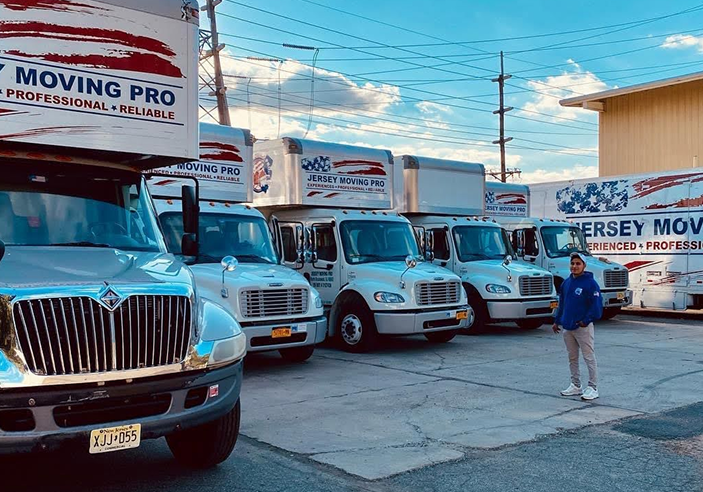
Mattress bags are non-negotiable in summer. They keep perspiration off fabric in the course of shoulder carries and add a quick slide layer on stairs that are tight. For leather couches and chairs, crews wrap using a breathable pad first, then a light layer of stretch film. Direct plastic-to-leather contact in heat can leave a tacky feel or imprint lines.
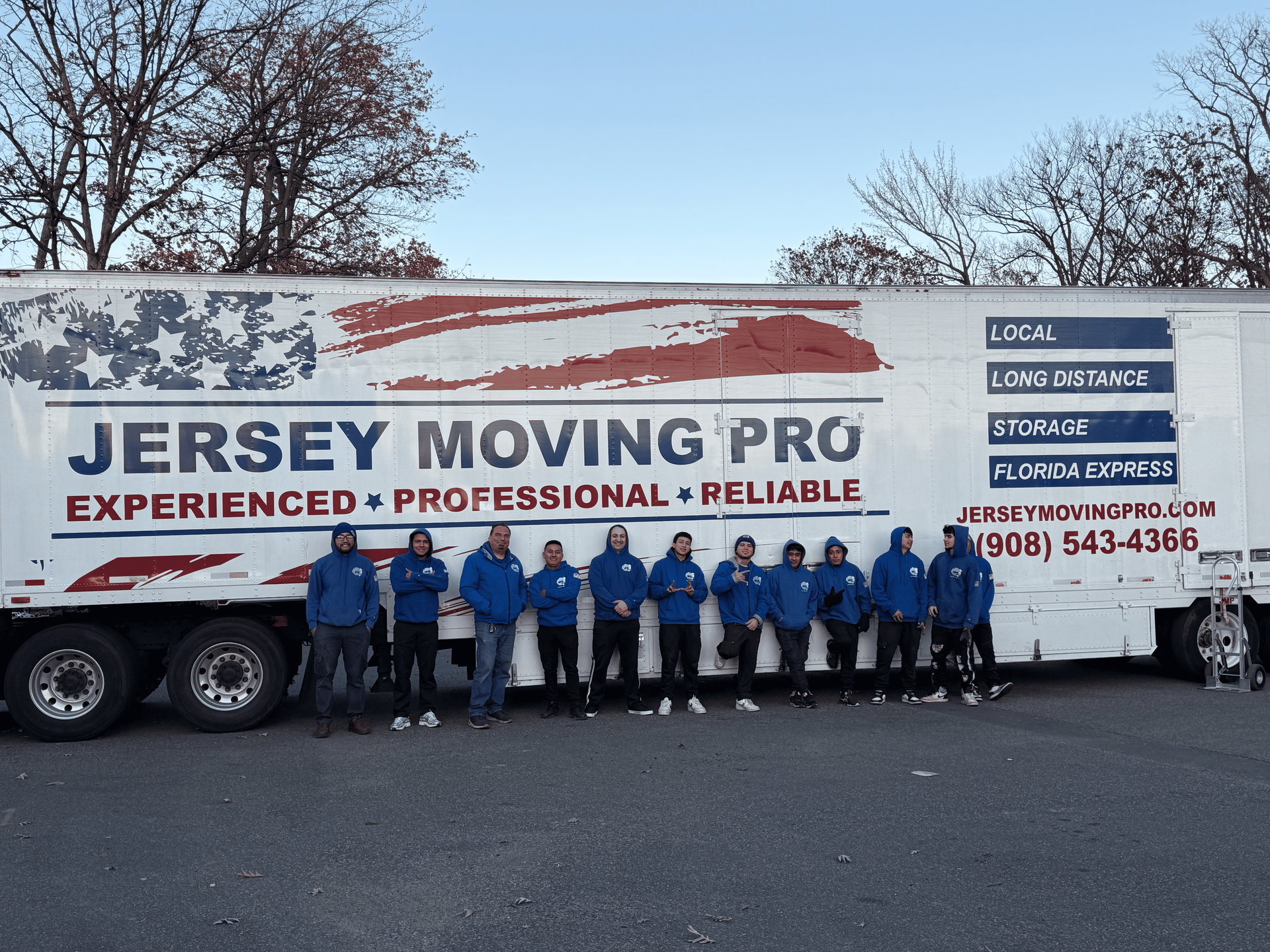
Trucks themselves need attention. Metal hooks, E-track, and aluminum floors absorb heat. Before setting a polished wood dresser against a track, a mover throws a pad layer as insulation. It is a small habit that prevents a faint heat mark you would only notice in slant light days later.
The summertime truck: air, space, and staging
No truck is a refrigerator, but airflow matters. Good movers create pathways. Boxes stack with deliberate voids, not in a perfect wall. Tall items like wardrobes go near the front, heavy furniture low and centered, fragile items shielded from the outer skin. In heat, crews will often prop the rear door during staging with a mesh screen to keep airflow without inviting dust. The cab AC does not cool the box, yet every degree you save by shade and airflow is a degree less stress on materials.
Some days call for a second truck or a shuttle. It sounds counterintuitive since that can add steps, but in extreme heat, shorter load times per truck reduce the period when goods sit in a hot box. Jersey Moving Pro creates that call when distance is short and access allows a effortless relay.
Training crews to work smart when the thermostat climbs
Summer is where training shows. Jersey Moving Pro runs refreshers each spring that cover heat stress signs, proper lift pacing, and material handling in humidity. Crews practice the switch from hand carries to dolly work on long runs. They audit knowledge of building rules that can complicate summer moves from Hoboken to Morristown: quiet hours, elevator pads, limited dock time. Everyone knows how to read a day. When an attic cleanout appears on the job order, the foreman plans ladder time early, not at 2 p.m. when that space becomes unhealthy.
New hires learn an old-school trick for grip. On humid days, a light dusting of rosin or a quick wipe with a dry towel keeps palms functional. They also learn to carry a small towel to keep sweat off glasses and hands, a minor detail that prevents slips. Good habits look ordinary until you skip them and pay for it.
Case vignette: a Parsippany three-bedroom in late July
A family of four scheduled a Friday move from a split-level in Parsippany to a colonial ten minutes away, set for the last week of July. Forecast: 94 degrees, humidity high by 9 a.m. The home had a narrow switchback staircase to the basement, two kids’ rooms through loft beds, and an upright piano.
Jersey Moving Pro moved the start time up to 7 a.m. and sent an extra hand to rotate carries. The foreman ordered the day differently than in spring. Basement items were first while the interior was coolest, then kids’ rooms, then living room. The piano was wrapped and boarded by 9:30, out the door by 10. Lunch happened in the truck on AC throughout a 15-minute drive window. At the new home, the AC was on thanks to yesterday’s call from the office. Unload began with kitchen and bedrooms, saving the heavy dressers until the thermostat dropped a few degrees. The crew used runners and low-tack tape, removed promptly. By 2:30 p.m., the last item, a sectional, came off. The family had one minor request, swapping two pieces between rooms, done without a sigh. No one was lightheaded, nothing was scuffed, and the day still ended early enough to miss the Friday rush hour snarl on Route 10. That is what a heat-aware plan looks like in practice.
When heat meets hustle: capacity, rush hours, and New Jersey realities
Summer brings not just heat, but traffic. Garden State Parkway, I-80, and Route 46 tighten after 3 p.m., and an hour in stop-and-go is hotter than an hour on a ramp. Scheduling buffers help. Jersey Moving Pro typically plans summer locals with a two-hour cushion to absorb a blown elevator slot or a construction detour. For high-rises, the office confirms elevator pads and times in writing, then reconfirms the morning of the relocation. Missed elevator windows become sweat and overtime.
Busy season also means compressed calendars. Same-day quotes matter because clients need decisions fast. Crews can handle a last-minute add-on only if supplies and staging are ready. Trucks leave the yard with extra water, extra pads, and a small cache of breathable wraps so a second stop in the afternoon does not begin with a scramble.
Client prep that pays dividends on a hot day
Clients have more power to shape a summer move than they realize. Cooling the destination the day before is one piece. Clearing green waste and hoses from narrow side yards is another. Marking attic and garage items that can wait until evening reduces midday climbs into the hottest spaces. Labeling boxes plainly limits hover time in doorways while a mover squints through glare.
A short list helps when you are packing for July:
- Keep heat-sensitive items with you: medications, cosmetics, candles, certain electronics, and anything that warps or melts. Chill a few bottles of water for the crew in the fridge and empty the ice maker early to avoid drips during disconnect. Set aside a small fan to use at the top of stairs in the course of load and unload. Confirm parking options on both ends so trucks do not bake in a no-parking scramble. If possible, pre-stage boxes in the coolest room near the exit door to shorten hot carries.
Those five steps cost little and change the day more than an extra roll of tape.
The intersection of quality standards and hot-weather realities
Movers love the phrase white-glove service. In summer, the phrase must adapt to the heat. Gloves get wet. White gloves turn gray by the second hour. The real quality is consistent protection in inconsistent conditions. Jersey Moving Pro’s method ties together expert wrapping techniques for furniture, thoughtful floor protection, and a commitment to zero damage that holds even when the mercury climbs.
Hot tubs, pool tables, gun safes, and fitness equipment present special risk because their mass invites shortcuts. The pros do not take them. Pool tables get disassembled, slates crated, and felt protected from humidity. Gun safes use stair climbers or additional manpower with shoulder straps, never a rushed slide. Gym equipment comes apart to lessen awkward holds. The trade-off is time for control, and in July, control is worth twice its weight.
Why families keep choosing the same crews summer after summer
Trust is a product of repetition under pressure. New Jersey families often relocation within the same counties, sometimes twice in five years. They remember the crews that kept calm in 93-degree heat, that showed up early enough to grab the curb spot on a narrow street, that carried a grandparent’s china cabinet down a tight colonial staircase without a nick. Jersey Moving Pro’s record of successful New Jersey relocations benefits from that memory. The company’s consistency across seasons, from snow in February to heat in July, becomes visible when you watch them adjust without drama.
On a broader level, the best movers invest in training, equipment, and communication that isolates the client from the frictions of the day. GPS tracking on trucks, detailed inventory documentation, and certificates of insurance on request are the quiet infrastructure that keeps a move from slipping when heat pushes everyone toward their limit. You will not notice those choices if everything goes right, which is the point.
A few words on limits, because summer demands humility
Sometimes the correct heat decision is to slow down. A third-floor walk-up at 3 p.m. in a heat advisory is not the moment to push for a record time. Crews that have the discipline to throttle back for safety, then ramp up again when shade returns, protect your belongings and their bodies. That judgment separates pros from grinders.
It also means owning the occasional reschedule. Severe heat forecasts with high humidity and interior spaces without ventilation can justify shifting the attic cleanout to the early evening or the following morning. No one likes changing a plan, yet the alternative is a higher risk of damage or injury. Clients know when you explain the why in concrete terms.
The day after: what heat leaves behind and how pros close the loop
Good movers think beyond the last box. Heat accelerates fatigue. It can mask minor scrapes on furniture that become visible later as the finish cools. Jersey Moving Pro encourages clients to walk through rooms after a short rest and good light returns, to flag anything that looks off. The company’s standard for customer communication includes quick follow-ups and a clear procedure for addressing concerns. When a crew is confident in its care, it has no fear of that second look.
Trucks get extra attention post-shift in summer. Pads go out to dry if they picked up moisture. Dollies and straps get wiped. Shade tents return to the right bins. Those steps prime the next day so no one discovers damp pads at 7 a.m. When the season is at full tilt, that reset is the only way to keep the quality steady.
The bigger picture: moving well in all four seasons
Heat is one chapter in a New Jersey moving year that also includes nor’easters, early sunsets in winter, pollen surges in spring, and leaves underfoot in fall. A company that handles July with poise often displays the same discipline in January using snow and ice. Jersey Moving Pro’s guide to moving during New Jersey’s four seasons reads like a long ledger of specific, unglamorous habits. Clear the path. Protect the floors. Load in the right order. Match your gear to the weather. Communicate early and often. Repeat that across summer weekends from Parsippany to Morris Plains to the Jersey Shore, and you develop a culture that holds up when the day goes sideways.
There is nothing mysterious about moving well in summer heat. It is a series of practical decisions, made consistently, before anyone breaks a sweat. When those decisions are built into training, schedule, and gear, the crew walks into a July morning with a plan rather than a hope. That is how the couches stay clean, the piano stays cool, the floors stay unmarked, and the family walks into a home that feels like a fresh start instead of a trial by sun.